
FITNESS EQUIPMENT
Commercial strength machines.
Compare selectorised and plate-loaded equipment, then build a balanced movement list for your members and available floor space.
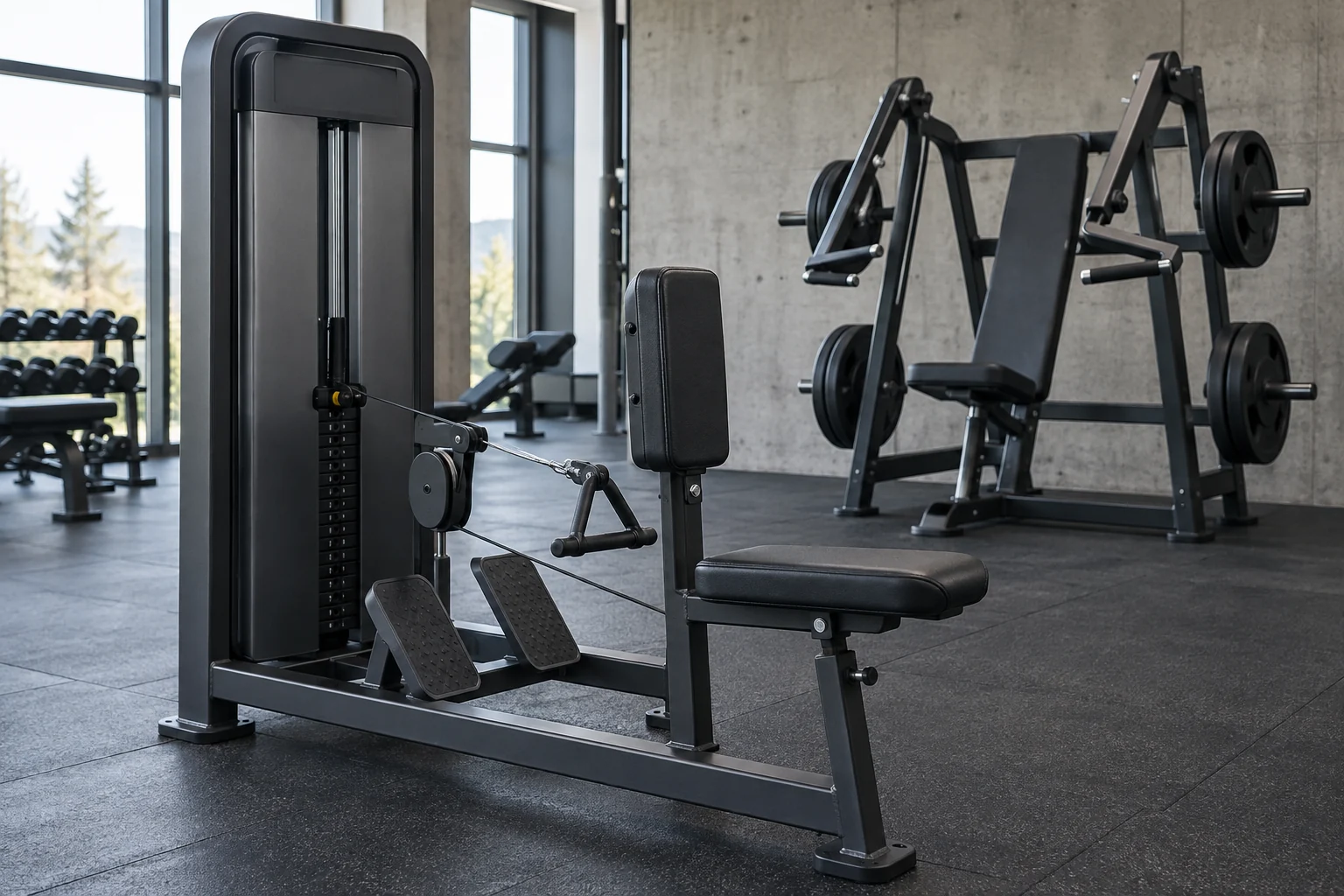
Choose the loading approach.
| Type | How it works | Planning priority |
|---|---|---|
| Selectorised | Weight selection through a pin and enclosed stack | Useful for quick adjustments and mixed experience levels |
| Plate-loaded | Users load the selected plates onto the machine | Plan plate storage, handling space and useful load progression |
Selectorised equipment.
Selectorised equipment can make a strength floor easy to understand and adjust. Selection should cover useful movement patterns without filling the room with overlapping stations. Consider the user population, adjustment range, weight increments and approach to each machine. Compare the operating envelope with the available space, not only the steel frame dimensions.
| Item | What to specify | Why it matters |
|---|---|---|
| Movement coverage | Push, pull, leg and trunk stations selected for the brief | Avoid unnecessary duplication and missing key functions |
| Adjustment | Seat, pad and start-position arrangements | Users need a clear and suitable setup |
| Resistance system | Stack, selector, cables, pulleys and travel | Review operation and replacement-part availability |
| Frame & finish | Construction, contact points, upholstery and finish | Inspect build and surfaces used throughout the day |
| Dimensions | Footprint, operating envelope and delivery dimensions | Confirm circulation and access to the room |
| Documentation | Applicable test evidence, instructions and parts list | The records must match the selected model |
Plate-loaded equipment.
Plate-loaded machines can suit a strength-focused gym or complement a pin-loaded circuit. They introduce a shared load-handling task: plates need to move between machines and storage without obstructing others. Plan plate compatibility, loading positions, movement envelopes and bench adjustment together. An impressive frame is not a substitute for clear ratings and permitted-use instructions.
| Item | What to specify | Why it matters |
|---|---|---|
| Machine selection | Movement, loading points, adjustment and working envelope | Match training needs and user capability |
| Load compatibility | Plate interface, loading length and stated limits | Confirm the exact selected machine and plate combination |
| Benches | Adjustment range, stability and permitted use | Review how the bench is positioned and stored |
| Construction | Connections, stops, grip surfaces and upholstery | Inspect the high-contact and moving areas |
| Storage | Plate trees or integrated storage and carrying routes | Keep loading tasks out of circulation routes |
| Service parts | Bushings, pads, fasteners and model-specific wear items | Identify replacements before they are needed |
Space for the machine and the person.
Review the working range of every arm, seat, handle and loading position. Keep the circulation route outside these active envelopes. Plate-loaded stations also need safe access to stored plates.
Build the order by movement.
List lower-body, press, pull and core requirements, then check that popular movements have enough availability at peak times. Confirm adjustability for the intended users, wear parts, assembly instructions and the agreed inspection records.