
FITNESS EQUIPMENT
Free weights & training essentials.
Dumbbells, plates, kettlebells, sandbags and storage for lifting areas and coached functional sessions. Specify sets by weight and by the number of people using them.
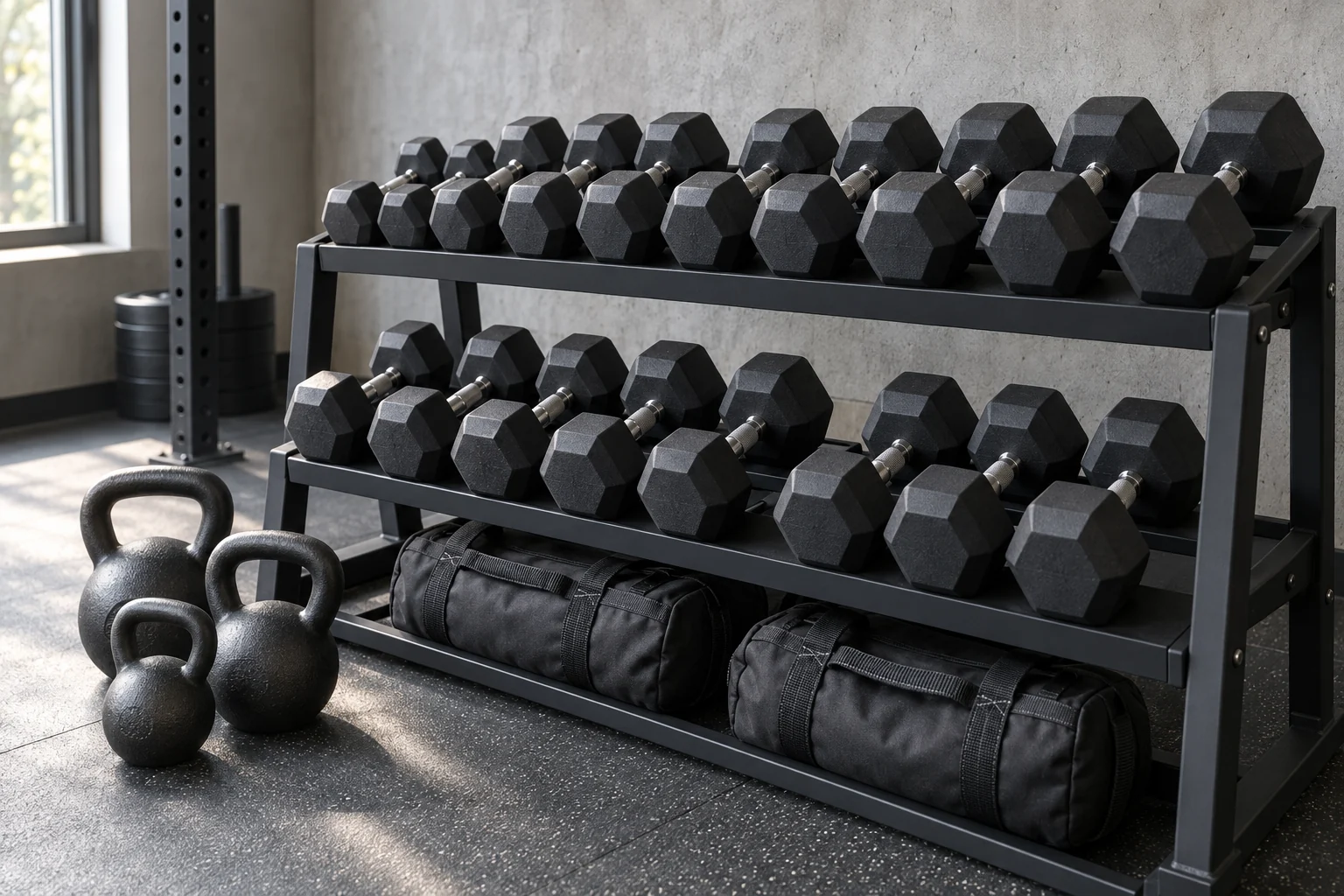
Build useful sets.
| Item | What to specify | Why it matters |
|---|---|---|
| Dumbbells | Pairs by weight, grip, head shape and rack positions | Cover common demand without filling circulation space |
| Plates & bars | Plate types, quantities, bar compatibility and collars | Match the selected racks and machines |
| Kettlebells | Weight range, handle shape and surface finish | Match carries, lifts and simultaneous stations |
| Sandbags | Nominal weight, handles, seams and permitted use | Choose the construction around the programme |
| Storage | Rack capacity, retention, access and anchoring information | Plan return points close to where equipment is used |
Count the users, then the equipment.
A class of twelve does not automatically need twelve of every item. List which stations run simultaneously, how athletes rotate and which load options they need. For an open gym, consider peak demand and duplicate the weights most likely to be used at the same time.
Storage is part of the training area.
Separate pick-up and return points from lifting and travel lanes. Keep heavier equipment accessible at suitable storage levels and confirm the rated capacity of the selected racks.
Checks before packing.
- Reconcile each weight and quantity against the set list.
- Check handles, accessible edges, finishes and visible damage.
- Inspect bag seams, closures and weight labels.
- Confirm storage instructions and any anchoring requirements.
- Separate heavy items so they cannot damage adjacent goods in transit.